


Education Vietnam 2027
May 06 (Thu) ~ 08 (Sat), 2027,
SECC, HCMC, Vietnam
Deep Technology Integration with ViewSonic's "Future Schools" Model at EDUCON 2025
9/12/2025
(1).png)
I. Introduction: Digital Transformation – The Biggest Question in Education
In the era of digitalization, educational digital transformation is no longer optional but a mandatory path for educational institutions to meet the complex learning needs of the modern student generation. The biggest question is not just "what is the new technology" or "which device should we buy," but how technology can truly upgrade the teaching and learning experience, turning traditional classrooms into interactive, personalized, and creative environments.
At the prestigious Education Vietnam 2025 (EDUCON 2025) forum, the panel discussion "Technology Integration with ViewSonic Future Schools" became the focal point, providing answers from practical, strategic, and highly inspiring perspectives. The session demonstrated that technology is only truly effective when integrated systematically, becoming a core component of the entire pedagogical approach.
This article will delve into the crucial insights shared, from the pioneering Future Schools model, practical implementation experiences at leading international schools, to the role of ViewSonic technology solutions in creating a sustainable learning environment for the future.
II. The Three Speakers: A Combination of Educational Leadership and Technology Expertise
The success of the discussion stemmed from the multidisciplinary expertise of the three speakers, representing the perspectives of the school administrator, the practical educator, and the technology specialist:
- 👨🏫 Mr. Martin Berridge – Principal of Primary School, Westlink International School Hanoi: Representing the voice of the international education sector, where new learning models are tested and adopted most rapidly. He brought experience in primary education management in a high-tech environment.
- 👨💼 Mr. John Slipachenko – Vice Principal, Hanoi Toronto School: In his senior management role, he shared strategies for technology deployment at the school level, particularly how to balance investment in facilities with teacher training.
- 👨💼 Mr. Thanh Nguyen – Educational Technology Solutions Specialist, ViewSonic Corporation: Representing the solutions angle, he provided an overview of the tools and platforms that teachers can use immediately to transform the digital classroom.

This combination ensured the discussion went beyond mere product introduction, focusing instead on solving the real challenges that schools in Vietnam face during the digital transition.
III. The Future Schools Model: Redefining the School of Tomorrow
The core focus of the panel was the Future Schools model—a concept pioneered and developed by ViewSonic. This goes beyond simply installing interactive displays; it is a philosophy of technology integration aimed at optimizing every aspect of the educational process:
1. Technology as the Core Component of Pedagogy
In the Future Schools model, technology (especially interactive solutions and learning management software) is not an "add-on" or a "support tool," but a core component of the teaching and learning methodology. This means technology must directly support modern pedagogical methods such as:
- Project-Based Learning (PBL): Students use technology to research, collaborate, and present project outcomes in a visual, multimedia format.
- Collaborative Learning: Digital platforms allow students to interact, share materials, and co-edit content in real-time, removing spatial barriers.
2. Data-Driven Learning
One of the greatest contributions of technology in Future Schools is the ability to digitize and analyze the learning process. Through digital classroom management tools, teachers can collect data on interaction levels, test results, and task completion times for each student.
- Benefit: This data helps teachers easily personalize the learning path, promptly identifying students who need support or those who can accelerate their learning pace. This is a breakthrough in creating a more equitable and effective learning environment.
3. Optimizing Interaction and Active Engagement
Future Schools prioritize multi-dimensional interaction. Technology allows students not only to interact with content (e.g., dragging and dropping, annotating directly on the screen) but also to engage deeply with teachers and peers. Optimized interaction encourages active student participation, transforming them from passive recipients into knowledge constructors.
IV. Practical Implementation Experience at International Schools
Mr. Martin Berridge and Mr. John Slipachenko provided real-world accounts of how they overcame challenges to build a digitized learning environment:
1. Comprehensive Digital Classroom Management
In international schools, technology implementation extends beyond the classroom to the Digital Classroom Management system.
- Challenge: Ensuring all devices operate smoothly, securing student data, and seamlessly integrating software (e.g., Learning Management Systems - LMS and interactive applications).
- Solution: Investing in integrated platforms like ViewSonic myViewBoard – an ecosystem that synchronizes interactive boards, personal computers, and student mobile devices, helping teachers easily control content, deliver lessons, and monitor learning progress remotely.
2. Teacher Training: The Key to Success
Both leaders emphasized that technology is merely a tool. Success lies in the capability of the teacher.
- Strategy: Organizing intensive training programs, not just on device usage but also on Digital Pedagogy – how to design lessons so that technology enhances effectiveness rather than causing distraction.
- Outcome: Teachers are encouraged to become flexible, visual, and highly personalized lesson designers, suitable for diverse student groups.
V. The Role of ViewSonic Technology in Supporting Educators
Mr. Thanh Nguyen from ViewSonic clarified how the company's technology solutions directly support the Future Schools model:
1. ViewBoard Interactive Display: The Hub of Interaction
The ViewBoard interactive display is considered the centerpiece of the future classroom. With multi-touch capability, high resolution, and integrated software, ViewBoard allows for:
- Visual Instruction: Teachers present 3D models, videos, and mind maps vividly and visually, enhancing students' ability to remember and comprehend lessons.
- Active Learning: Students can go to the board, annotate, or participate in interactive games directly, turning the ViewBoard into a large collaborative surface.
2. myViewBoard Platform: The Cloud Education Ecosystem
myViewBoard is the cloud software platform that enables teachers to:
- Flexible Lesson Design: Create lessons online, utilize pre-designed templates, and access a diverse resource library.
- Optimize Interaction: Quickly send quizzes, conduct polls, or collect student assignments during class.
- Remote Management: Easily access lessons from any device and securely share learning content.
This solution is not just a tool but a synchronized ecosystem that supports teachers in designing flexible, visual, and personalized learning activities without demanding extensive preparation time.
VI. Changing the Learning Culture and Moving Towards a Sustainable Future
The panel concluded that successful technology integration requires a shift in learning culture:
- Fostering Creativity: Technology provides the means for students to express their ideas in new ways, from creating videos and graphic designs to simple programming.
- Building a Learning Community: Technology connects teachers and students beyond the traditional classroom setting, creating a community where learning happens continuously.
Future Schools are not just schools with modern equipment; they are places that truly meet the needs of the future generation – a generation requiring problem-solving skills, critical thinking, and global collaboration abilities.
VII. Conclusion and Invitation to Education Vietnam 2026
Education Vietnam 2025 concluded with powerful messages about the indispensable role of technology in reshaping education. Sincere gratitude was extended to the speakers: Mr. Martin Berridge, Mr. John Slipachenko, and Mr. Thanh Nguyen for their practical and strongly inspiring insights.
And the transformation of education continues!
Education Vietnam 2026 is committed to bringing even more pioneering topics, more breakthrough technologies, and deeper global networking opportunities to help the Vietnamese education community achieve sustainable digital transformation goals.
This is an opportunity for educational leaders, teachers, and solution providers to collaboratively build the future. Join us so you don't miss the latest trends!
📣 Follow our fan page for the latest updates and register early for exhibition before December 31, 2025, to receive a 10% Early Bird discount!
Bài viết mới nhất
🤖 "Can AI teach you how to manage your allowance?" - A Comprehensive Guide to AI-Applied Financial Education in the 2025 Classroom
17/3/2026
🤖 "AI có thể dạy bạn quản lý tiền tiêu vặt ư?" - Cẩm Nang Toàn Diện về Giáo Dục Tài Chính Ứng Dụng AI Trong Lớp Học 2025
17/3/2026

Visitor Registration is NOW OPEN!
12/3/2026

MỞ CỔNG ĐĂNG KÝ KHÁCH THAM QUAN!
12/3/2026
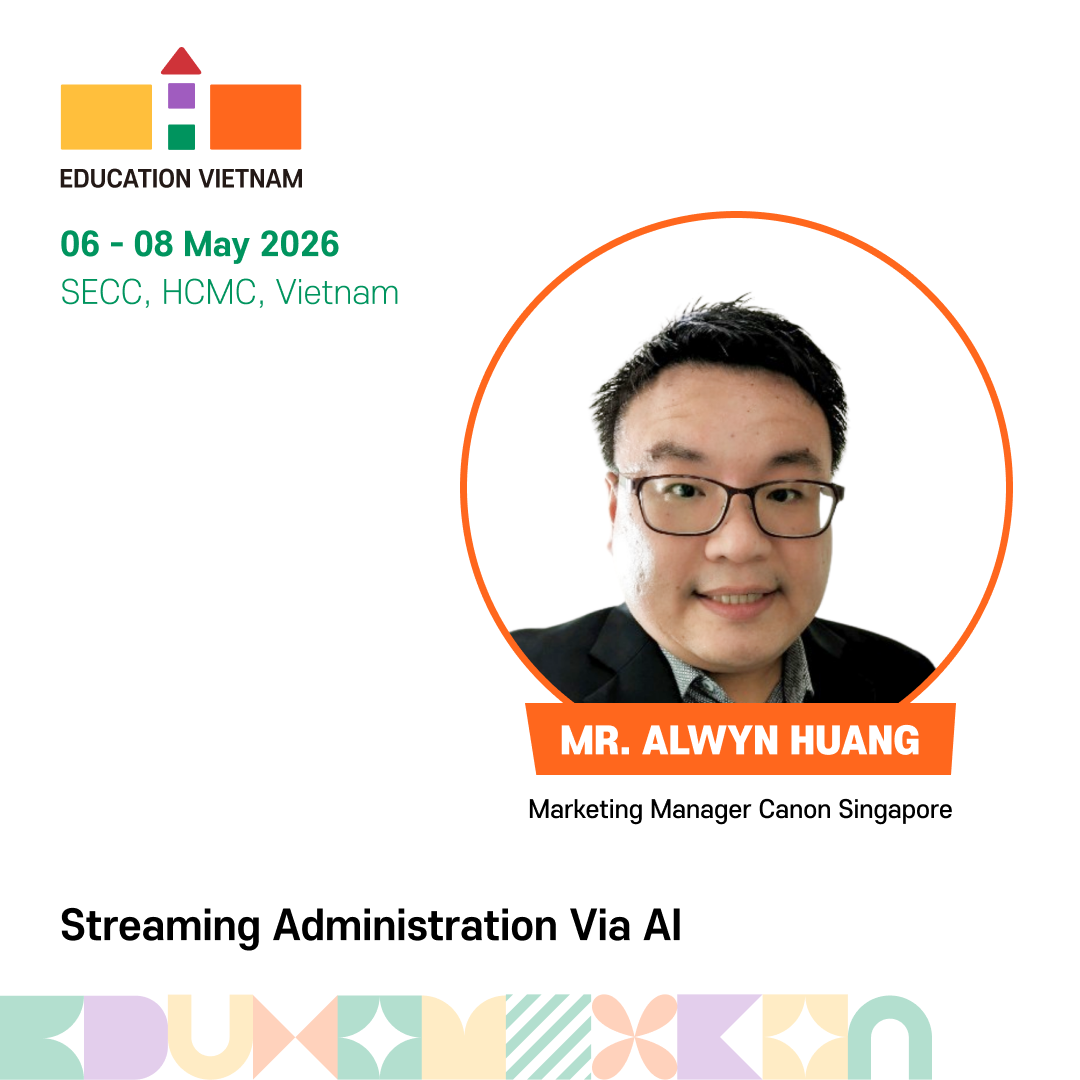
[EDUCON 2025] STREAMLINING EDUCATIONAL ADMINISTRATION WITH AI: RESOURCE OPTIMIZATION SOLUTIONS FROM CANON SINGAPORE
10/3/2026